Compress PDF for ProRankTracker: Keep Rank Tracking Reports, Keyword Snapshots, and Client PDFs Small Without Losing the Details
To compress a PDF for ProRankTracker, export the finished file, upload it to LifetimePDF's Compress PDF tool, start with Medium compression, and keep the smaller copy only if ranking rows, tag labels, chart legends, and notes still read clearly.
For most ProRankTracker workflows, under 2MB is a strong target for short ranking updates, while tagged keyword snapshots, local or device comparisons, and client-ready SEO packs usually sit best around 2MB to 5MB after light cleanup.
ProRankTracker PDFs usually get heavy for a familiar reason: one report starts serving several audiences at once. A client wants the plain-English takeaway, the strategist wants proof, the account manager wants something easy to forward, and the analyst wants enough ranking detail to defend the conclusion later. Good compression helps when it removes sharing friction without softening the tiny cues that make an SEO report trustworthy.
Fastest path: run the finished ProRankTracker PDF through LifetimePDF's Compress PDF tool at Medium, then do one quick readability check before you email, upload, archive, or present the smaller copy.
In a hurry? Jump to Quick start: compress a ProRankTracker PDF in under 2 minutes.
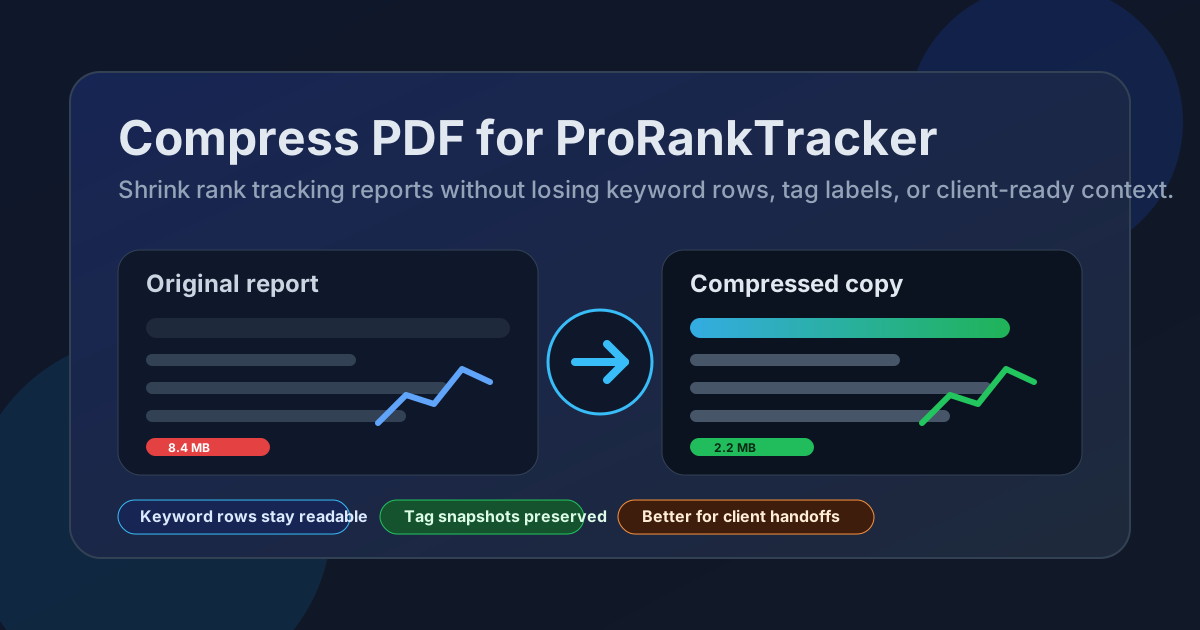
Table of contents
- Quick start: compress a ProRankTracker PDF in under 2 minutes
- Why ProRankTracker PDFs get bulky
- What file size should you aim for?
- Which compression level should you choose?
- Step-by-step: shrink a ProRankTracker PDF with LifetimePDF
- Best approach for common ProRankTracker PDF types
- What to trim before compressing harder
- How to keep rankings, labels, and notes readable
- Workflow habits that reduce PDF bloat
- Related LifetimePDF tools and useful reading
- FAQ (People Also Ask)
Quick start: compress a ProRankTracker PDF in under 2 minutes
If your real goal is simply make this ProRankTracker PDF smaller so it is easier to send and easier to open, this workflow is usually enough:
- Open Compress PDF.
- Upload the ProRankTracker PDF you actually plan to share, such as a rank tracking report, tagged keyword snapshot, landing-page summary, local SEO recap, or device comparison.
- Choose Medium compression first.
- Download the smaller copy and compare the new size with the original.
- Check the weakest details once: keyword rows, movement arrows, tag labels, chart axes, dates, URL snippets, and notes.
- If the file is still bulky, use Split PDF, Extract Pages, or Delete Pages before forcing a stronger setting across the whole report.
Why ProRankTracker PDFs get bulky
ProRankTracker files often become large even when the underlying report looks simple on screen. The weight usually comes from a mix of exported charts, long keyword tables, screenshots, repeated cover pages, appendix sections, and extra comparison views that only matter to one reader in the chain.
That matters because rank tracking PDFs are rarely private working files for long. They get attached to client emails, dropped into project folders, uploaded to portals, added to internal recaps, or saved as evidence for later conversations about movement, visibility, and next steps. The smaller the file gets without losing the proof, the easier all of that becomes.
The mistake is assuming harder compression is always the answer. In SEO reporting, clarity matters more than raw size. If the smallest ranking deltas, tag names, or screenshot callouts become fuzzy, you save bytes but lose trust.
What file size should you aim for?
A good target depends on the kind of ProRankTracker PDF you are sharing and how many pages of evidence it includes. These ranges work well in real workflows:
- Under 2MB: short executive updates, a tight keyword snapshot, or a one-audience recap.
- 2MB to 5MB: weekly ranking reports, tag-based summaries, landing-page performance reviews, and client-ready SEO packs.
- Over 5MB: usually a sign the PDF includes appendices, repeated screenshots, broad multi-market comparisons, or more proof than the recipient actually needs.
If you are sharing a monthly client pack, do not chase the smallest possible file. Aim for a report that opens quickly, forwards cleanly, and still lets the reader zoom in on a ranking row without frustration.
Which compression level should you choose?
Compression level matters because ProRankTracker exports mix text, table structure, charts, and sometimes screenshots. That blend rewards restraint.
Light compression
Use this when the PDF is already close to the size you want and you mainly need a small cleanup. It is also useful when the file contains tiny ranking movements, narrow keyword columns, or screenshot annotations you do not want to risk softening.
Medium compression
This is usually the best first pass. It tends to reduce size enough to matter while keeping tag labels, keyword rows, chart legends, and notes readable. For most ProRankTracker workflows, this is the setting that gives the best trade-off.
Strong compression
Use this only after you have already trimmed structural waste. If the report still feels too heavy after splitting appendices or removing repeated evidence, stronger compression can help. Just make sure you review the smallest text on the page before you keep the result.
Step-by-step: shrink a ProRankTracker PDF with LifetimePDF
- Export the final version first. Work from the exact PDF you plan to send, not an earlier draft.
- Open Compress PDF.
- Upload the file and choose Medium compression. This is the safest default for ranking reports.
- Download the smaller copy and compare sizes. If the gain is already meaningful, stop there.
- Review the fragile details. Check keyword rows, movement markers, date ranges, landing-page URLs, and screenshot callouts.
- Trim structure before pushing harder. If the file is still too large, extract the summary pages or split the appendix before trying Strong compression.
That order matters. Most over-compressed SEO PDFs happen because someone reaches for the strongest setting before removing pages the recipient did not need in the first place.
Best approach for common ProRankTracker PDF types
Short ranking updates
These are usually the easiest to compress. If the PDF is only a few pages and mostly table-driven, Medium compression is often enough to get under 2MB without making the report feel cheap.
Tagged keyword snapshots
These deserve a closer check after compression because tag names, grouped keyword labels, and narrow ranking changes can become harder to scan when the file is pushed too hard. Start with Medium and review one dense page at normal zoom.
Local or device comparison reports
These often bloat because they contain repeated layouts with only slight data changes. If several markets or devices are bundled together, split the PDF by audience instead of forcing one master file to carry every variation.
Client-ready monthly packs
These are usually where size problems show up. Keep the executive summary up front, move evidence into a later appendix, and consider extracting only the pages the client will actually review in the next meeting.
What to trim before compressing harder
If Medium compression still leaves the PDF larger than you want, trim waste before you squeeze quality harder. The biggest wins usually come from removing structure, not crushing the whole file further.
- Delete repeated cover or separator pages with Delete Pages.
- Extract only the executive summary or top sections with Extract Pages.
- Split client-facing pages from backup evidence with Split PDF.
- Crop oversized margins or screenshot whitespace with Crop PDF.
- Remove old comparison copies that only exist because the report was assembled from several exports.
If you do that cleanup first, Strong compression becomes a last resort instead of the main plan.
How to keep rankings, labels, and notes readable
A compressed ProRankTracker PDF only succeeds if the recipient can still use it without effort. Before you send it, review the details most likely to degrade:
- small keyword rows and ranking deltas
- tag labels and filters
- chart legends and axes
- landing-page URLs or SERP notes
- screenshot callouts and annotations
- summary recommendations at the bottom of the page
You do not need a full QA loop. One careful pass on the densest page is usually enough. If that page looks clean, the rest of the report is usually fine too.
Workflow habits that reduce PDF bloat
The cleanest ProRankTracker PDFs usually come from better report habits upstream. A few small decisions make later compression easier:
- Export only the sections tied to the next conversation.
- Keep client summaries separate from deep-dive evidence when possible.
- Use one strong screenshot instead of three similar ones.
- Archive full evidence internally and send a tighter reader-facing version externally.
- Compare the original and compressed copy once with Compare PDFs if the report supports a sensitive decision.
That approach saves time because you stop treating every ranking export like a permanent record for everyone. Most readers only need the pages that answer the question in front of them.
Related LifetimePDF tools and useful reading
If you handle ProRankTracker exports often, these tools usually matter more than compression alone:
- Compress PDF for the first size reduction pass.
- Split PDF for separating summaries from appendices.
- Extract Pages for sending only the pages a client or teammate needs.
- Delete Pages for cutting repeated covers or outdated proof.
- PDF Metadata Editor for cleaner final handoffs.
Useful companion reading: Share Smaller Rank Tracking Reports, Keyword Snapshots, and Client PDFs Faster and Compress PDF for ProRankTracker Without Monthly Fees.
Need the practical version? Compress the finished ProRankTracker PDF at Medium, review one dense page, and then split or extract pages only if the file is still bigger than you want.
FAQ (People Also Ask)
How do I compress a PDF for ProRankTracker?
Export the ProRankTracker report as a PDF, upload it to a PDF compressor, start with Medium compression, and preview the smaller result before sharing it. Medium is usually the safest first pass because it cuts file size while keeping ranking rows, chart labels, tag groups, and notes readable.
What file size should I aim for with ProRankTracker PDFs?
Under 2MB works well for short ranking updates and focused keyword snapshots. Broader weekly reports, local or device comparisons, and client-ready SEO packs usually work best around 2MB to 5MB as long as the smallest useful details still look clear.
Will compression make ProRankTracker ranking tables or charts blurry?
It can if you compress too aggressively. That is why Medium compression is usually the best first pass. Always review ranking rows, chart legends, tag labels, comparison dates, screenshot callouts, and commentary before keeping the smaller copy.
Should I split a long ProRankTracker PDF instead of compressing harder?
Often, yes. If one PDF combines an executive summary, tagged keyword evidence, screenshots, location comparisons, and appendix pages for different readers, splitting it usually works better than forcing stronger compression across the whole file.
Which LifetimePDF tools pair well with ProRankTracker exports?
Compress PDF is the main starting point. Split PDF, Extract Pages, Delete Pages, Crop PDF, Compare PDFs, and PDF Metadata Editor all help when you need smaller, cleaner, client-ready ProRankTracker files.